
Vertigo & Vestibular Rehabilitation at Physical Therapy 180
Vertigo is a specific type of dizziness characterized by a false sensation of spinning, tilting, or swaying. It is most frequently triggered by sudden changes in head position—such as rolling over in bed, tilting your head up to look at a high shelf, or bending down.
At Physical Therapy 180, we specialize in diagnosing and treating vestibular dysfunctions, helping you calm the spinning and safely reclaim your balance.
Understanding BPPV: The Most Common Cause of Vertigo
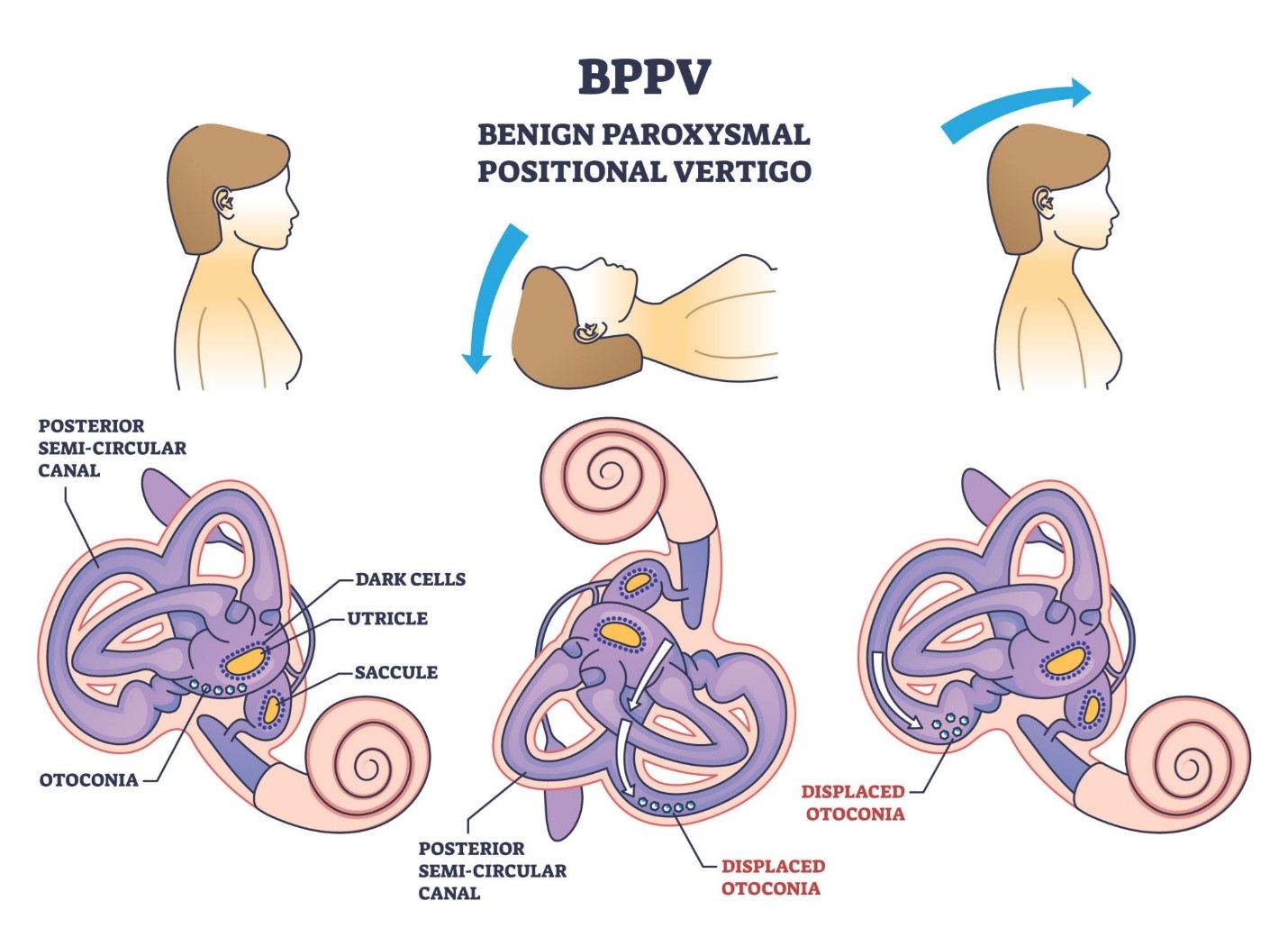
The most frequent type of vertigo we treat is Benign Paroxysmal Positional Vertigo (BPPV). As shown in the diagram above, your inner ear contains fluid-filled structures called semicircular canals which track head movement.
BPPV occurs when tiny calcium carbonate crystals, called otoconia, become displaced from their proper home in the maculae and drift into these canals. When you move your head, these loose crystals shift, sending false movement signals to your brain that result in a sudden, intense wave of spinning.
The Broader Impact of Vestibular Dysfunction
Your vestibular system is the internal GPS located deep inside your inner ear. When it is compromised, it can cause a wide array of disruptive symptoms beyond vertigo, including:
- Nausea, vomiting, and motion sickness.
- Tinnitus (ringing in the ears) and localized hearing loss.
- Severe unsteadiness, spatial disorientation, and an increased risk of falls.